
BANDUNG, Indonesia — The Center for Excellence of Lesson and Learning Studies (CELLS), Universitas Pendidikan Indonesia, brought together Malaysian primary and secondary school leaders and lecturers in a cross-border professional learning programme held from 26 July to 2 August 2026.
Entitled “Lesson Study for Sustainable School Improvement: Leadership Workshop for Principals and Headmasters”, the programme formed part of the Executive Professional Microcredential in Leading Lesson Study for Professional Learning Community and Sustainable School Improvement.
The programme was jointly organised by CELLS UPI, the Indonesia Association of Lesson Study (ALSI), the Malaysia Association of Lesson Study (MYALS), and Global Training Organizer (GTO) Malaysia.
Moving Beyond Classroom Observation
The programme began with a critical proposition: Lesson Study is more than observing a teacher deliver a lesson. Its central concern is understanding how students learn, where they encounter difficulties, and how evidence from the classroom can guide the next instructional decision.
Participants therefore examined the leadership conditions required to make Lesson Study sustainable. These included establishing a core team, providing time for collaborative planning, maintaining professional safety during reflection, and connecting Lesson Study with the school’s Professional Learning Community (PLC).
A school-based display of PAK-21 PLC strategies captured this direction through five interconnected elements: reflective dialogue, de-privatisation of practice, a collective focus on student learning, collaboration, and shared norms and values. Lesson Study was positioned within this framework as a means of opening classroom practice to collective inquiry and improvement.
Learning Across Classrooms and Systems
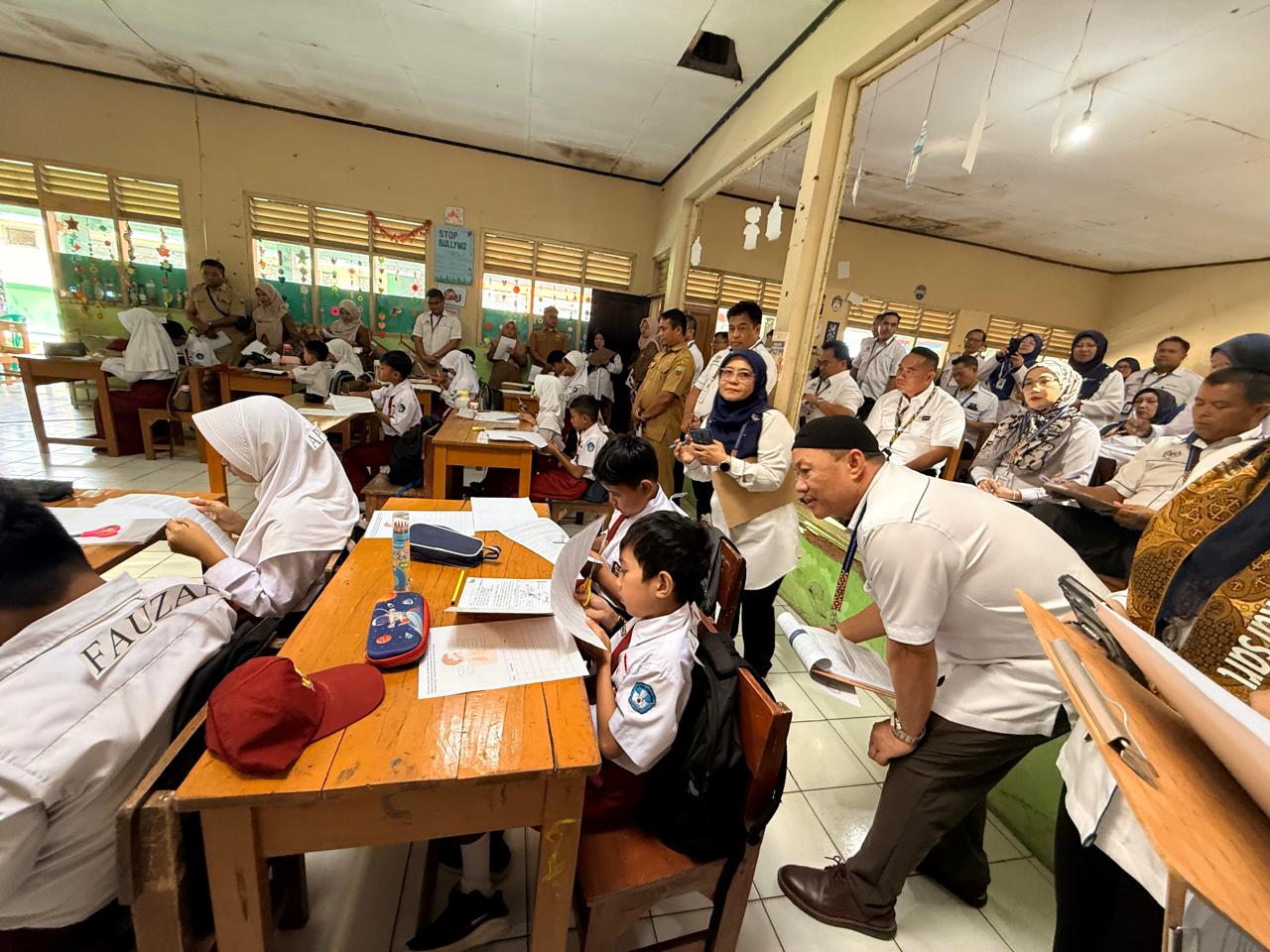
Rather than relying solely on seminar presentations, participants engaged directly with educational practice through open-class observations and post-lesson reflections in Sumedang, Cimahi, and Bandung.
During these sessions, participants were asked to focus primarily on evidence of student learning rather than simply evaluating teacher performance. Teachers, observers, school leaders, and facilitators then examined students’ responses, interactions, assignments, and learning difficulties in evidence-based reflection sessions.
The programme also included an analysis of Malaysian classroom videos. Participants compared the observed practices with the realities of schools in Sabah, identifying what may be transferable, what requires adaptation, and what should not be adopted without considering the local context.
This comparative approach treated professional learning as a process of disciplined inquiry—not the uncritical transfer of a model from one school or country to another.
Turning Workshop Learning into School Action
The academic programme culminated in the design of a one-month school-based microcredential project. Each participant prepared a feasible implementation plan that identified the school-learning issue to be addressed, the people involved, the implementation timeline, and the minimum evidence to be collected.
Draft projects were presented in small groups for feedback from peers and facilitators. This ensured that participants left Bandung not only with new concepts, but also with an actionable design for initiating or strengthening Lesson Study within their own institutional contexts.
The next stage began after participants returned to Malaysia, where the one-month follow-up project was intended to help collaborative planning, classroom observation, evidence-based reflection, and follow-up improvement become part of normal school practice rather than remain one-off workshop activities.
Advancing the Sustainable Development Goals
The programme aligned most directly with Sustainable Development Goal 4: Quality Education. Its attention to student-learning evidence supported the ambition of Target 4.1 for effective learning outcomes, while its international professional-learning dimension was particularly relevant to Target 4.c on strengthening teacher capacity through international cooperation.
The collaboration among CELLS UPI, ALSI, MYALS, GTO Malaysia, participating schools, and Malaysian education leaders also reflected SDG 17: Partnerships for the Goals, particularly Target 17.16, which calls for multi-stakeholder partnerships that mobilise and share knowledge and expertise.
Through this programme, CELLS reinforced a vital message: sustainable school improvement does not begin with another temporary programme. It begins when school leaders create the conditions for educators to study student learning together, challenge existing practice, and continuously improve it.
The completed programme combined leadership development, classroom-based inquiry, cross-border professional learning, school action planning, and cultural immersion across a final total of 44 instructional periods (JP).
The Content Structure
Final programme content, instructional duration, instructional periods, and alignment with the Sustainable Development Goals, as delivered from 27 July to 1 August 2026.
| Day | Programme Content | Duration | Instructional Periods (JP) | Relevant SDG Target(s) |
|---|---|---|---|---|
| Monday, 27 July 2026 | Content 0: Programme orientation and clarification of the workshop–microcredential relationship | 45 minutes | 1.00 | SDG 4.c; SDG 17.16 |
| Content 1: The significance of Lesson Study for sustainable school improvement | 75 minutes | 1.67 | SDG 4.1; SDG 4.c | |
| Content 2: Alignment of SGM 2.0, KOMPAS 2.0, and the Sabah educational context | 75 minutes | 1.67 | SDG 4.c | |
| Content 3: Backward design and school-level implementation targets | 60 minutes | 1.33 | SDG 4.c | |
| Monday subtotal | 255 minutes | 5.67 JP | ||
| Tuesday, 28 July 2026 | Content 4: Observation of an open STEM lesson | 90 minutes | 2.00 | SDG 4.1; SDG 4.c |
| Content 5: Evidence-informed post-lesson reflection | 45 minutes | 1.00 | SDG 4.1; SDG 4.c | |
| Content 6: Policy and sustainability dialogue with school and local stakeholders | 90 minutes | 2.00 | SDG 17.16 | |
| Tuesday subtotal | 225 minutes | 5.00 JP | ||
| Wednesday, 29 July 2026 | Content 7: Briefing and observation of an open STEM lesson | 90 minutes | 2.00 | SDG 4.1; SDG 4.c |
| Content 8: Evidence-informed post-lesson reflection | 60 minutes | 1.33 | SDG 4.1; SDG 4.c | |
| Content 9: Analysis of Malaysian classroom videos and comparison with live lessons | 90 minutes | 2.00 | SDG 4.1; SDG 4.c; SDG 17.16 | |
| Content 10: Building school readiness for Lesson Study | 90 minutes | 2.00 | SDG 4.c | |
| Wednesday subtotal | 330 minutes | 7.33 JP | ||
| Thursday, 30 July 2026 | Content 11: Briefing and observation of an open STEM lesson | 90 minutes | 2.00 | SDG 4.1; SDG 4.c |
| Content 12: School-based post-lesson reflection | 60 minutes | 1.33 | SDG 4.1; SDG 4.c | |
| Content 13: Evidence debrief—distinguishing observation from interpretation | 60 minutes | 1.33 | SDG 4.1 | |
| Content 14: Distinguishing Lesson Study from routine instructional supervision | 45 minutes | 1.00 | SDG 4.c | |
| Content 15: Transfer Laboratory—assessing contextual relevance and adaptability | 45 minutes | 1.00 | SDG 4.c; SDG 17.16 | |
| Thursday subtotal | 300 minutes | 6.67 JP | ||
| Friday, 31 July 2026 | Content 16: Leadership actions before, during, and after Lesson Study | 60 minutes | 1.33 | SDG 4.c |
| Content 17: Designing a school-based microcredential project | 60 minutes | 1.33 | SDG 4.c | |
| Small-group presentation of draft projects and peer feedback | 60 minutes | 1.33 | SDG 4.c; SDG 17.16 | |
| Content 18: Structured synthesis and programme reflection | 60 minutes | 1.33 | SDG 4.c | |
| Content 19: One-month microcredential follow-up and implementation arrangements | 30 minutes | 0.67 | SDG 4.c | |
| Friday subtotal | 270 minutes | 6.00 JP | ||
| Saturday, 1 August 2026 | Cultural immersion: Pasar Baru and/or Saung Angklung Udjo workshop and ensemble performance | 600 minutes | 13.33 JP | SDG 4.7 |
| Final programme total, Monday–Saturday | 1,980 minutes (33 hours) | 44.00 JP | SDGs 4 and 17 | |
Programme Participants
Final list of Malaysian school leaders and lecturers who completed the programme. Position and institution are combined under Affiliation.
| No | Full Name | Affiliation | Completion Status |
|---|---|---|---|
| 1 | Aidatul Binti Kuyong | Guru Besar — SK Kg Bahagia, Sandakan | COMPLETED |
| 2 | Ernawaty Jamil | Guru Besar — SK Ulu Liawan, Keningau | COMPLETED |
| 3 | Irwan Bin Buing | Guru Besar — SK St Anthony, Tenom | COMPLETED |
| 4 | Izeannah Binti Ibrahim | Guru Besar — SK Kuala Mengalong, Sipitang | COMPLETED |
| 5 | Jamili Bin Napi | Guru Besar — SK Marakau, Ranau | COMPLETED |
| 6 | Mohammad Najib Bin Abdul Said | Guru Besar — SK Biah Batu 65, Beaufort | COMPLETED |
| 7 | Raffeah Binti Mulanda | Guru Besar — SK Bingolon Kudat | COMPLETED |
| 8 | Robiah Binti Lapo | Guru Besar — SK Paris 3, Kinabatangan | COMPLETED |
| 9 | Sabilin Bin Asiri | Guru Besar — SK Karagasan, Ranau | COMPLETED |
| 10 | Siti Rokiah Binti Kadir | Guru Besar — SK Pasir Putih Sandakan | COMPLETED |
| 11 | Suriyani Binti Maarop | Guru Besar — SK Pekan Beaufort, Beaufort | COMPLETED |
| 12 | Wal Idaya Bt Francis @ Wilidaya Abdullah | Guru Besar — SK Ulu Sapi, Telupid | COMPLETED |
| 13 | Ridwan Bin Yahya | Guru Besar — SK Kukuro Beaufort | COMPLETED |
| 14 | Ramlan Bin Mohd Arfan Salim | Guru Besar — SK Garama, Beaufort | COMPLETED |
| 15 | Anifah Binti Beluar | Guru Besar — SK. Datong | COMPLETED |
| 16 | Abdul Gani Bin Ajim | Pengetua — SMK Entilibon, Telupid | COMPLETED |
| 17 | Amiluddin Bin Majuki | Pengetua — SMK Tandek 2, Kota Marudu | COMPLETED |
| 18 | Danny Bin Sulimin | Pengetua — SMK Sook, Keningau | COMPLETED |
| 19 | Fazman Bin Mohd Yatim | Pengetua — SMK Batu Sapi, Sandakan | COMPLETED |
| 20 | Felicia Michael Asang | Pengetua — SMK St Michael Sandakan | COMPLETED |
| 21 | Kasman Bin Salda | Pengetua — SMK Kalabakan, Tawau | COMPLETED |
| 22 | Latipah Binti Tahir | Pengetua — SMK Taman Fajar Sandakan | COMPLETED |
| 23 | Malaim Bin Gumbina | Pengetua — SMK Libaran Sandakan | COMPLETED |
| 24 | Manja Bin Abdul Kahal | Pengetua — SMK Merotai Besar, Tawau | COMPLETED |
| 25 | Norlaila Binti Taharim | Pengetua — SMK Paris, Kinabatangan | COMPLETED |
| 26 | Railen @ Maria Binti Guang | Pengetua — SMK Ulu Sapi, Telupid | COMPLETED |
| 27 | Sabdin Bin Saribin | Pengetua — SMK Keningau, Keningau | COMPLETED |
| 28 | Saloma Binti Ambo | Pengetua — SMK Tawau II, Tawau | COMPLETED |
| 29 | Shofriza Washlaini Binti Muhammad Iyen | Pengetua — SMK Agama Kota Kinabalu | COMPLETED |
| 30 | Banjamin @Ismail Bin Atin | Pengetua — SMK Kimanis, Papar | COMPLETED |
| 31 | Dr. Esmali Bin Bari | Pensyarah — Institut Aminuddin Baki Cawangan Sabah | COMPLETED |
| 32 | Mohd Malim Esanuddin | Pensyarah — Institut Aminuddin Baki Cawangan Sabah | COMPLETED |
| 33 | Indra Sahril Bin Sayuati | Pensyarah — Institut Aminuddin Baki Cawangan Sabah | COMPLETED |
| 34 | Ramlah Abdul Rahim | Pensyarah — Institut Aminuddin Baki Cawangan Sabah | COMPLETED |
| 35 | Hapsah Binti Magit | Pensyarah — Institut Aminuddin Baki Cawangan Sabah | COMPLETED |
| 36 | Andi Bin Olot | Pensyarah — Institut Aminuddin Baki Cawangan Sabah | COMPLETED |
| 37 | Hilena Binti Ichu | Pensyarah — Institut Aminuddin Baki Cawangan Sabah | COMPLETED |