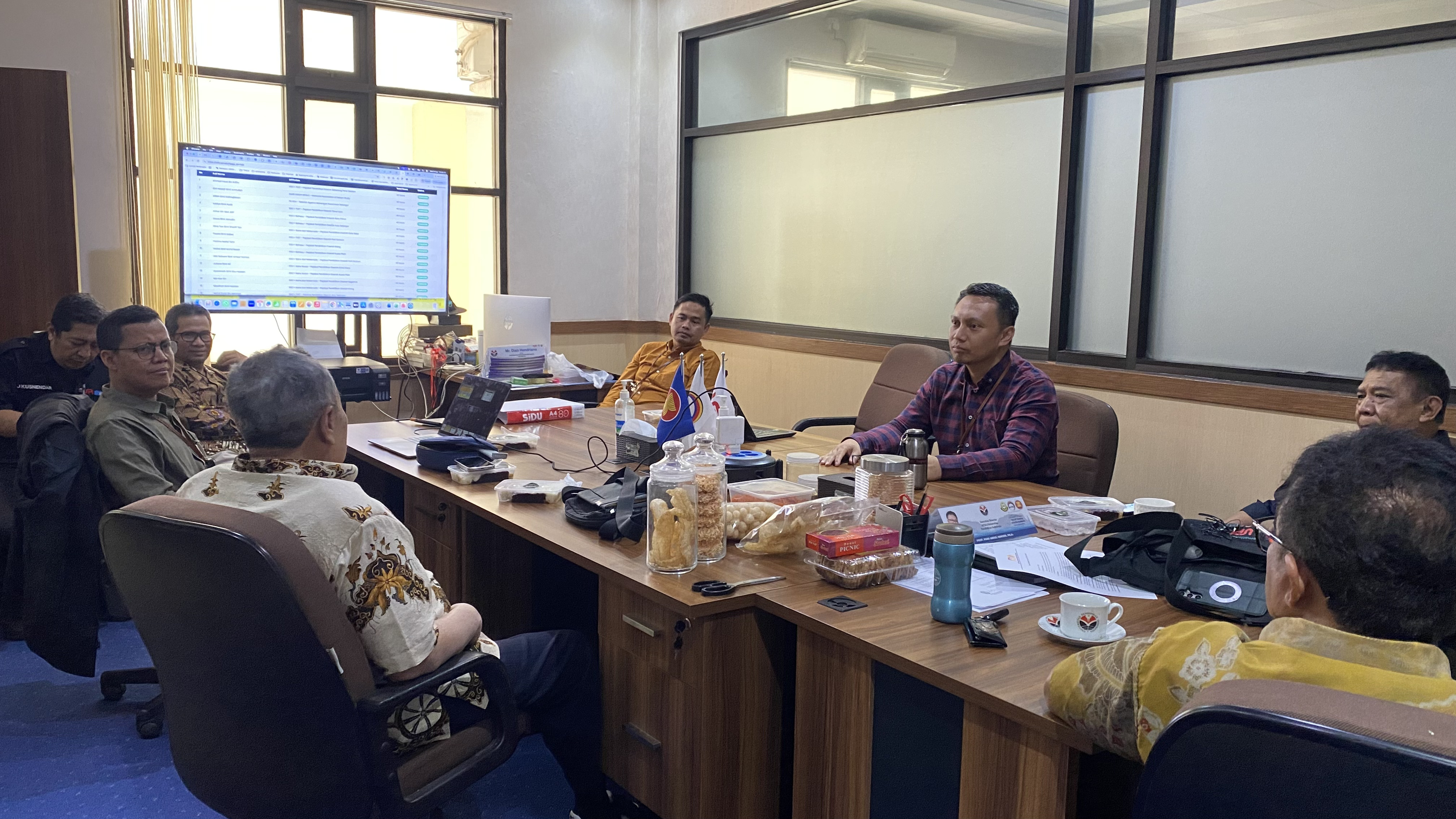
BANDUNG, Indonesia — The Center of Excellence for Lesson and Learning Studies (CELLS) at Universitas Pendidikan Indonesia (UPI) held a meeting with the Academic and Training Quality Assurance (ATQA) UPI to discuss the development and strengthening of microcredential programs, while also preparing opportunities for collaboration through the Association of Southeast Asian Teacher Education Network (AsTEN).
The meeting, held at ATQA UPI, served as a forum to introduce CELLS’s development and discuss the direction of microcredential development with clear competency focuses relevant to educator professional development and improvements in learning quality.
Arif Hidayat, M.Si., Ph.D., Head of CELLS UPI, presented the profile and development focus of CELLS, covering Lesson Study for Learning Community through Buka Kelas, Interdisciplinary STEM, Educational Research, and Inclusive and Diversity. Lesson Study is one of CELLS’s main focuses in supporting educator professional development and practice-based learning.
Ari Arifin Danuwijaya, S.Pd., M.Ed., Ph.D., and the CELLS team also participated in discussions on program development and the direction of collaboration. The program currently consists of five modules, with the possibility of adding practical and reporting modules at participants’ home institutions or schools as part of the learning sequence.
Prof. Fuad Abdul Hamied, M.A., Ph.D., Executive Director of ATQA, encouraged CELLS to be introduced at the AsTEN forum, particularly at the Presidential Meeting or Conference. According to the discussion, the AsTEN forum in Bangkok, planned for 24–26 November 2026, could provide an opportunity to introduce CELLS, expand networks, and initiate discussions with other institutions interested in teacher education and credential development.
Refining the Microcredential Concept
In the discussion on microcredentials, Prof. Dr. H. Mohammad Ali, M.A., M.Pd., emphasized the importance of ensuring that the microcredential has specific and focused competencies. The program name should reflect the main competencies participants are expected to acquire and remain consistent with the badge and certification provided.
The discussion also covered the possibility of combining the five modules into one integrated microcredential with Lesson Study as its core, or developing several microcredentials with more specific competency focuses. The program structure, learning workload, implementation stages, assessment, practice, and completion evidence need to be reviewed before the certification mechanism is established.
Strengthening Certification and Digital Badges
Ari emphasized the importance of a clearer competency recognition mechanism through badges and certification. In the discussion, ATQA is expected to play a role in the certification process by reviewing the content, program structure, learning process, assessment, practice, and completion evidence.
Prof. Ahmad Bukhori Muslim, S.Pd., M.Ed., Ph.D., also participated in discussions on credential development and opportunities to strengthen the network. Within ATQA, Prof. Ahmad Bukhori Muslim is a UPI academic and one of the ATQA team members involved in developing quality assurance for teacher education at the regional level.
Dian Hendriana, M.Pd., who serves in the ATQA Secretariat, also confirmed the possibility of using ATQA badges for activities developed by CELLS. Jajang Kusnendar, M.Si., was also part of the UPI team involved in CELLS institutional development and program discussions.
Further discussion highlighted that digital badges could be equipped with a QR Code linked to program and participant information to support verification. At the same time, participants emphasized that the certification mechanism should consider the substance and process of the program as a whole.
Preparing for the AsTEN Forum
The meeting also discussed opportunities to expand program development beyond Malaysia to other ASEAN countries. This step requires a clear program design, microcredential naming aligned with the competencies offered, and a certification mechanism that can support competency recognition.
As a follow-up, CELLS and ATQA will prepare a proposal and presentation materials containing the CELLS profile, focus areas, achievements, track record, international collaborations, microcredential structure, certification format, and opportunities for expanding networks at the ASEAN level.
The meeting was part of the efforts of CELLS UPI and ATQA to clarify the direction of Lesson Study-based microcredential development while preparing for the introduction of the program and further collaboration opportunities through the AsTEN network.