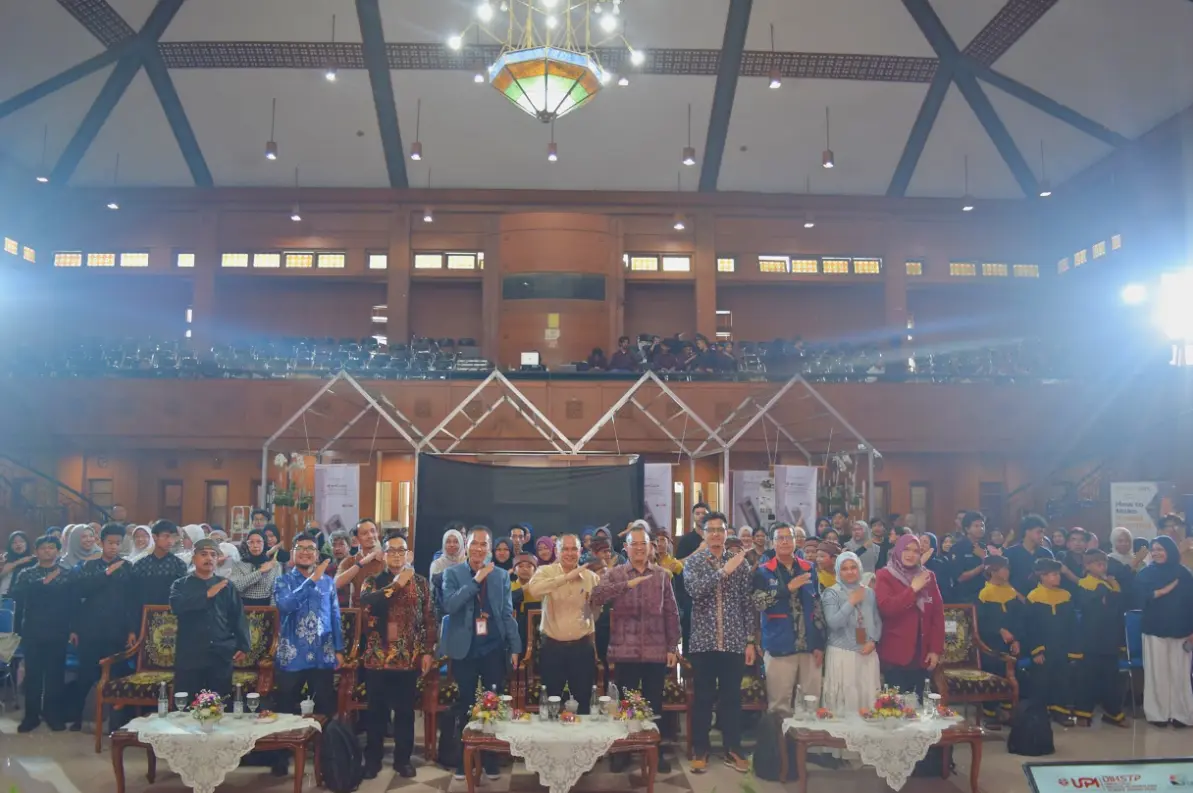
BANDUNG – The Center for Excellence of Lesson and Learning Studies (CELLS) at Universitas Pendidikan Indonesia (UPI) showcased educational innovations inspired by Sundanese local wisdom at the Sustainable Development Expo and Seminars 2026, held on October 21–22, 2026, at Gedung Achmad Sanusi, Bandung. As part of UPI’s 72nd anniversary celebration, CELLS introduced its EtnoSTEM initiatives, connecting traditional cultural knowledge with Science, Technology, Engineering, and Mathematics (STEM).
Through the In-Saintek-supported EtnoSTEM Discovery Hub initiative, CELLS continued its collaboration with the Cireundeu Indigenous Community in Cimahi, West Java. The program, chaired by Lina Aviyanti, M.Si., Ph.D., involves lecturers and students from the Biology Education, Physics Education, and Physics study programs at UPI’s Faculty of Mathematics and Natural Sciences Education (FPMIPA) as members of the CELLS EtnoSTEM team. Building on cultural exhibitions and community-based learning activities in 2025, the initiative explores local knowledge as a resource for STEM education. This includes rasi (cassava rice) as a context for studying local food sources and food security, and the potential reuse of cassava-processing waste in experimental building materials.
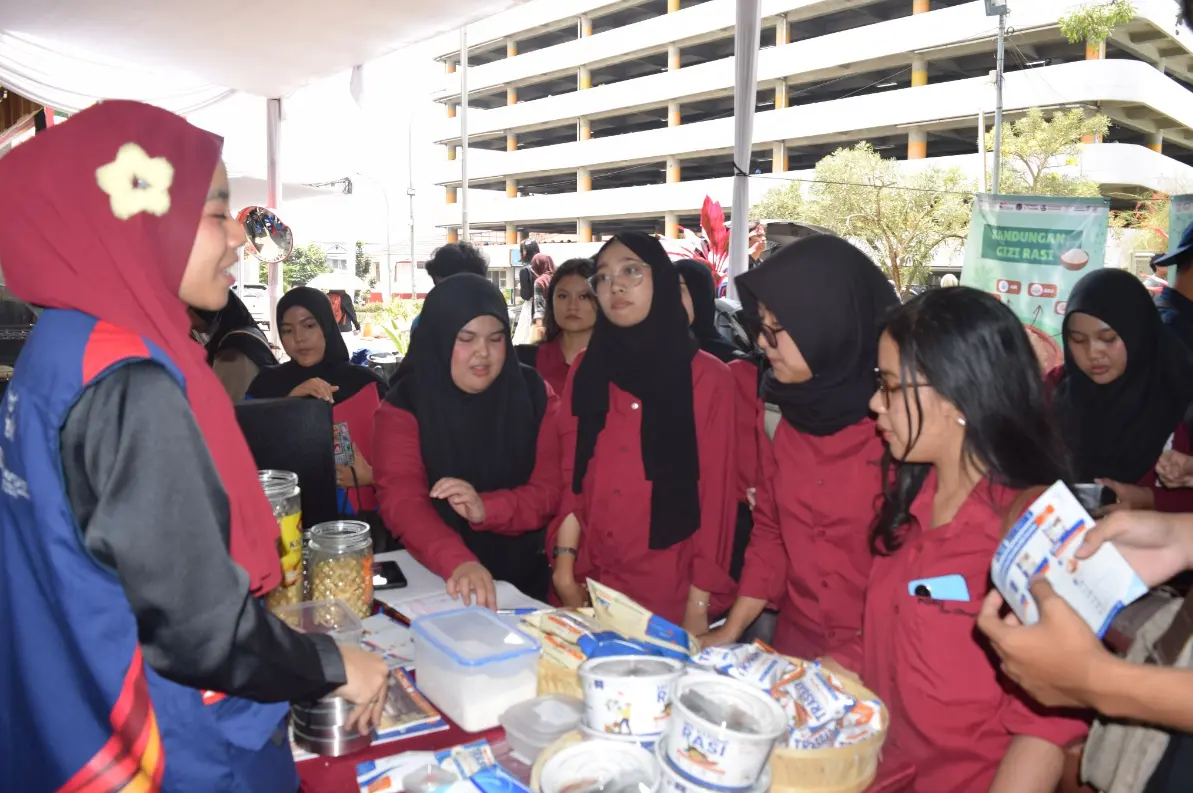
On the first day, the CELLS EtnoSTEM booth featured traditional musical instruments, cassava-based food innovations, and interactive science demonstrations. Visitors could observe the displays, try playing traditional instruments, and discuss the scientific principles behind the exhibits with the team. These interactions showed how familiar Sundanese cultural practices could serve as starting points for STEM learning.
Traditional instruments such as Angklung Buncis, Karinding, and Celempung were presented as examples of how sound, vibration, frequency, and resonance can be studied through cultural heritage. These instruments demonstrated how familiar traditions can serve as practical learning resources for understanding scientific concepts.
Another highlight was the development of food products based on rasi, or cassava rice, a traditional staple food of the Cireundeu community. The exhibition featured TRASCUIT, biscuits made from rasi flour; TRASBAR, a cassava-rice-based snack bar; and noodles incorporating rasi flour. These innovations explored new possibilities for local food processing while supporting food diversification and the preservation of traditional food heritage.
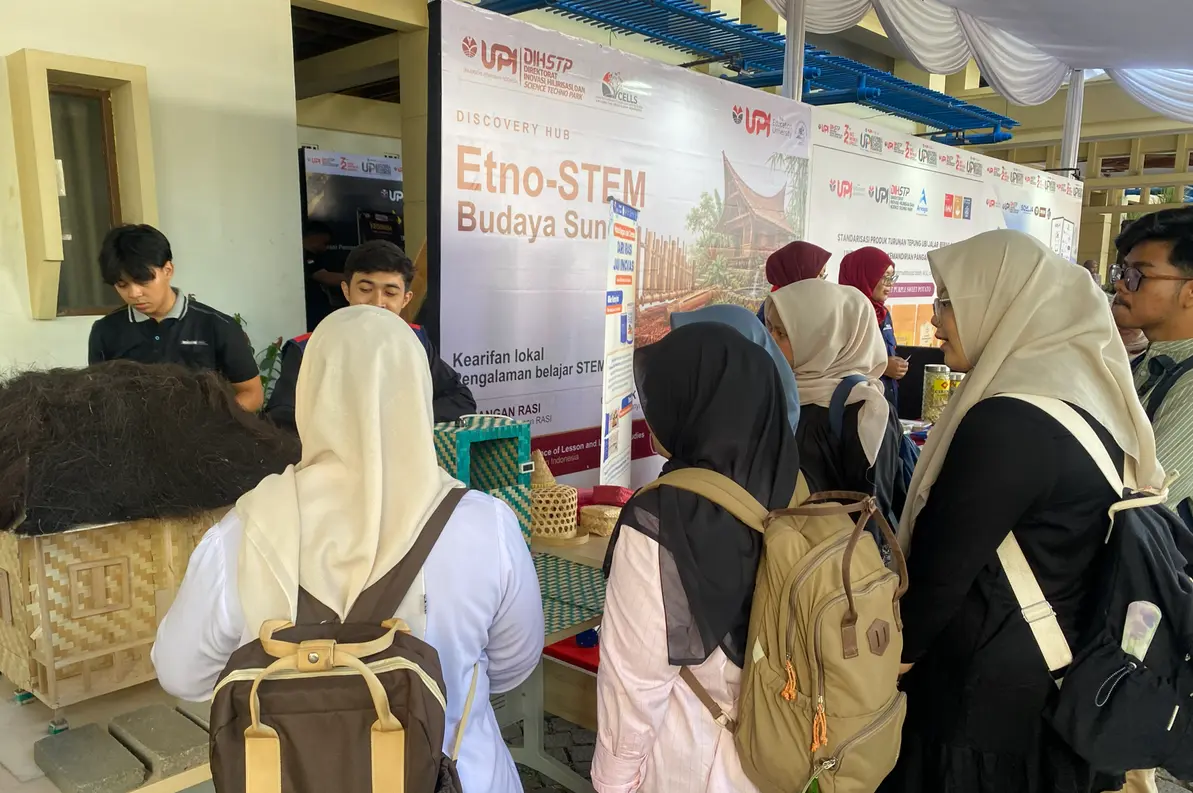
The exhibition also introduced experimental building blocks incorporating cassava-processing waste and a miniature traditional Sundanese house. An interactive demonstration compared temperature changes in model enclosures made from woven bamboo and plywood under a heat source, allowing visitors to explore how different materials influence heat transfer and thermal conditions in buildings.
CELLS has also developed EtnoSTEM learning modules based on Cireundeu’s local knowledge, covering traditional musical instruments, bamboo weaving, rasi, and other cultural practices. Designed to support observation, experimentation, and scientific inquiry, these resources help educators connect classroom lessons with everyday traditions and introduce students to STEM concepts through familiar cultural contexts.
On the second day, October 22, CELLS held an EtnoSTEM talkshow bringing together representatives of the Cireundeu Indigenous Community, educators, and parents. The discussion focused on the relevance of Sundanese cultural heritage in modern society and its potential as a foundation for science education.
Jajat, representing the Cireundeu community, emphasized that preserving cultural identity does not mean rejecting technological progress. He explained that the community continues to embrace developments while maintaining its traditions and carefully considering how new technologies may influence local values.
From the educational perspective, Tata Koswara and Yeni shared their experiences supporting the Research-Based Learning (RBL) program at SMP Alfa Centauri Bandung. The program involved approximately 110 students working on 25 research projects related to Sundanese culture over roughly four months. These projects encouraged students to explore cultural traditions through scientific inquiry, including the use of technology and coding to study Sundanese script.
Parent representatives Widan Faizar and Melati Ardiantari Puspawati also discussed their children’s learning experiences. They highlighted how research activities encouraged students to ask questions about everyday cultural practices and develop practical ideas, such as improving traditional banana-drying methods.
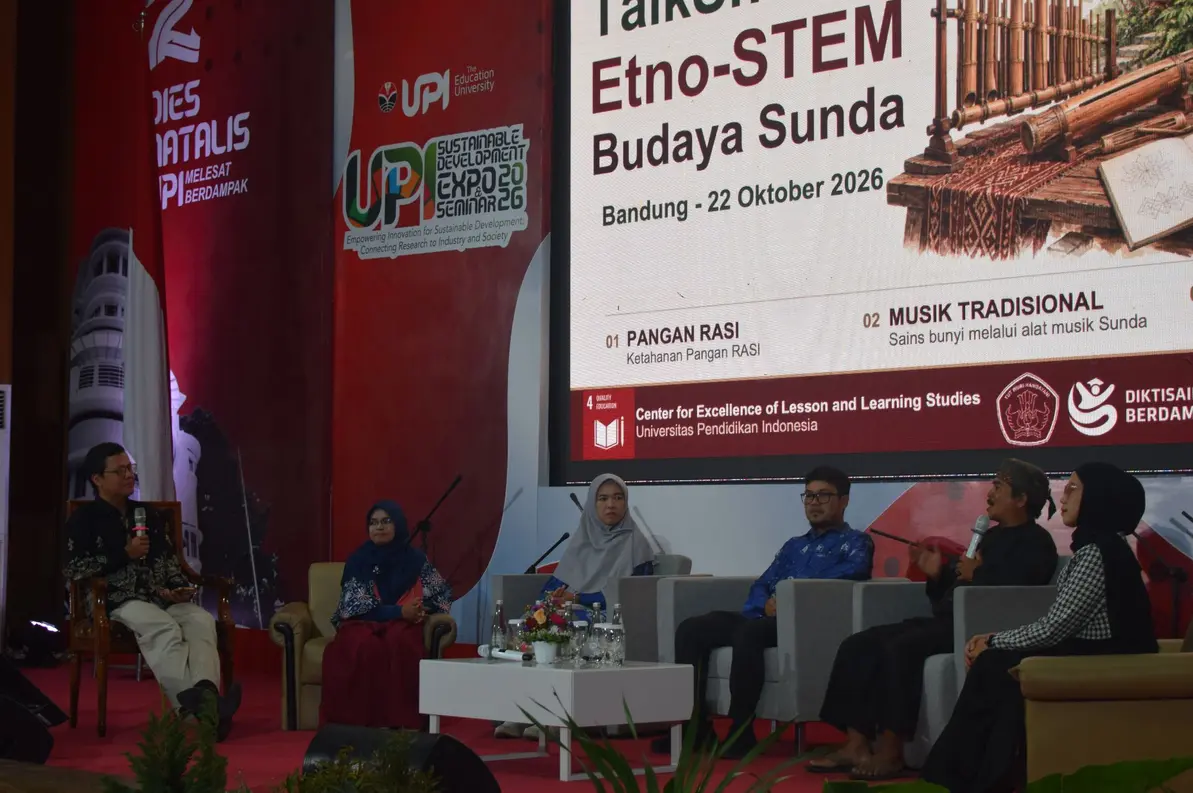
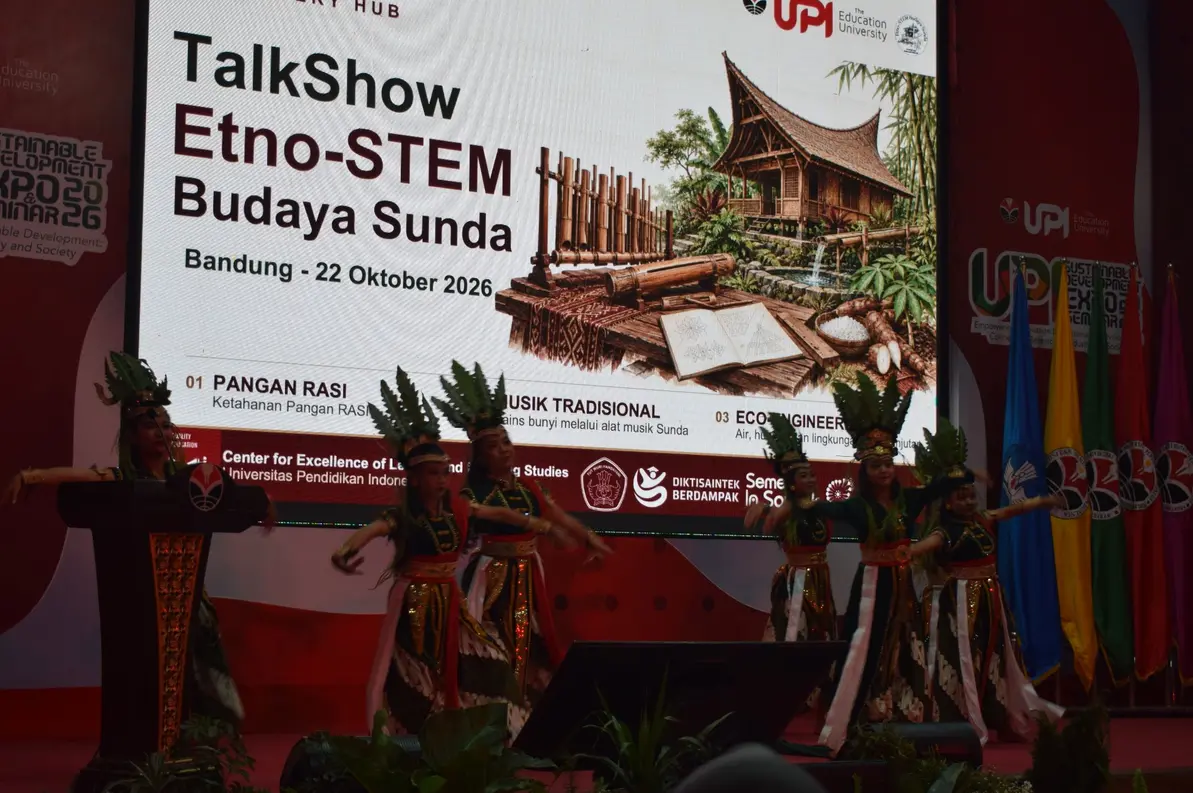
The event was further enriched by cultural performances from the Cireundeu community, featuring traditional instruments such as Angklung Buncis, Karinding, and Celempung, alongside singing and Sundanese dance performances. These performances highlighted the cultural traditions explored throughout the EtnoSTEM activities.
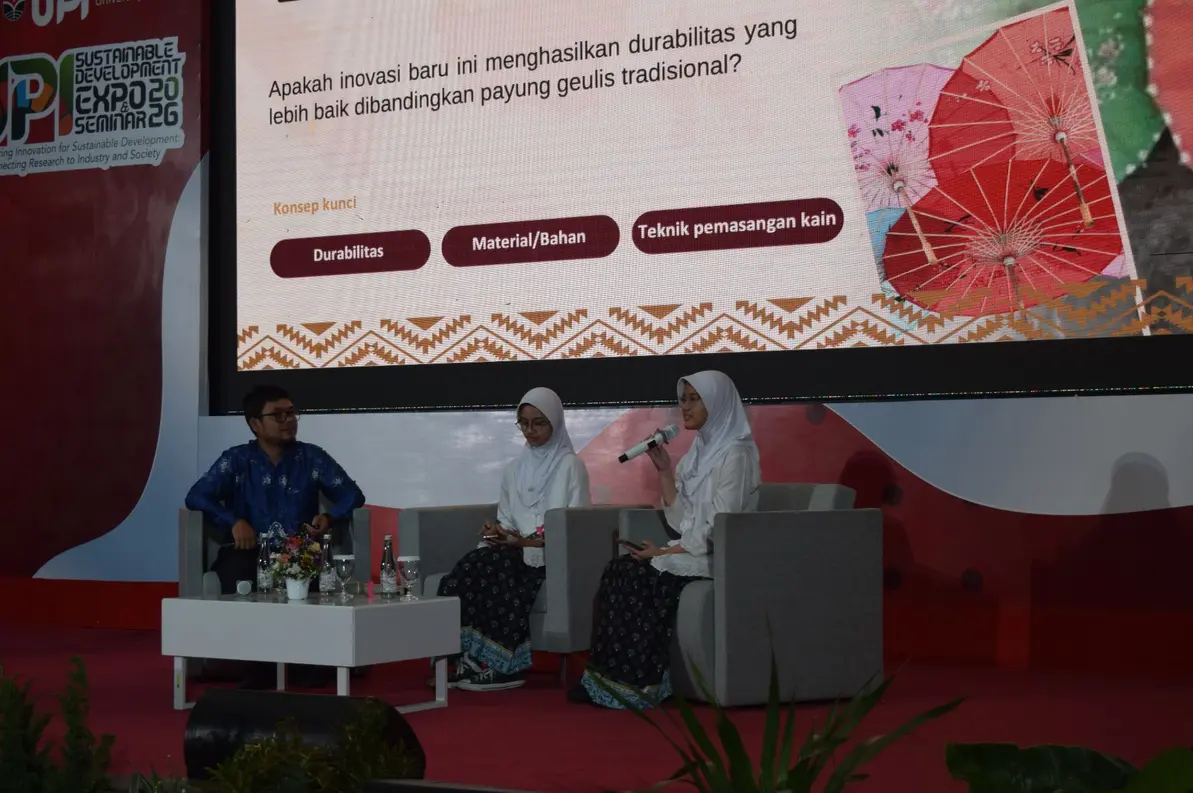
Another highlight was the presentation of three RBL projects by students from SMP Alfa Centauri Bandung. The projects explored the use of a solar dryer to improve the production of pisang sale, the durability of traditional Payung Geulis from Tasikmalaya, and the potential use of coconut fibers in roofing materials inspired by traditional Sundanese houses. Students presented their research questions, hypotheses, and proposed methods, demonstrating how local traditions can inspire scientific investigation and engineering ideas.
Through its participation in the Sustainable Development Expo and Seminars 2026, CELLS UPI continued to bring researchers, educators, students, families, and indigenous communities together through EtnoSTEM. By connecting cultural knowledge with scientific approaches, CELLS aims to expand opportunities for contextual STEM learning while supporting the preservation and continued relevance of Sundanese local wisdom.